
Loading...
Serving State College, PA and surrounding areas. (814) 996-0035
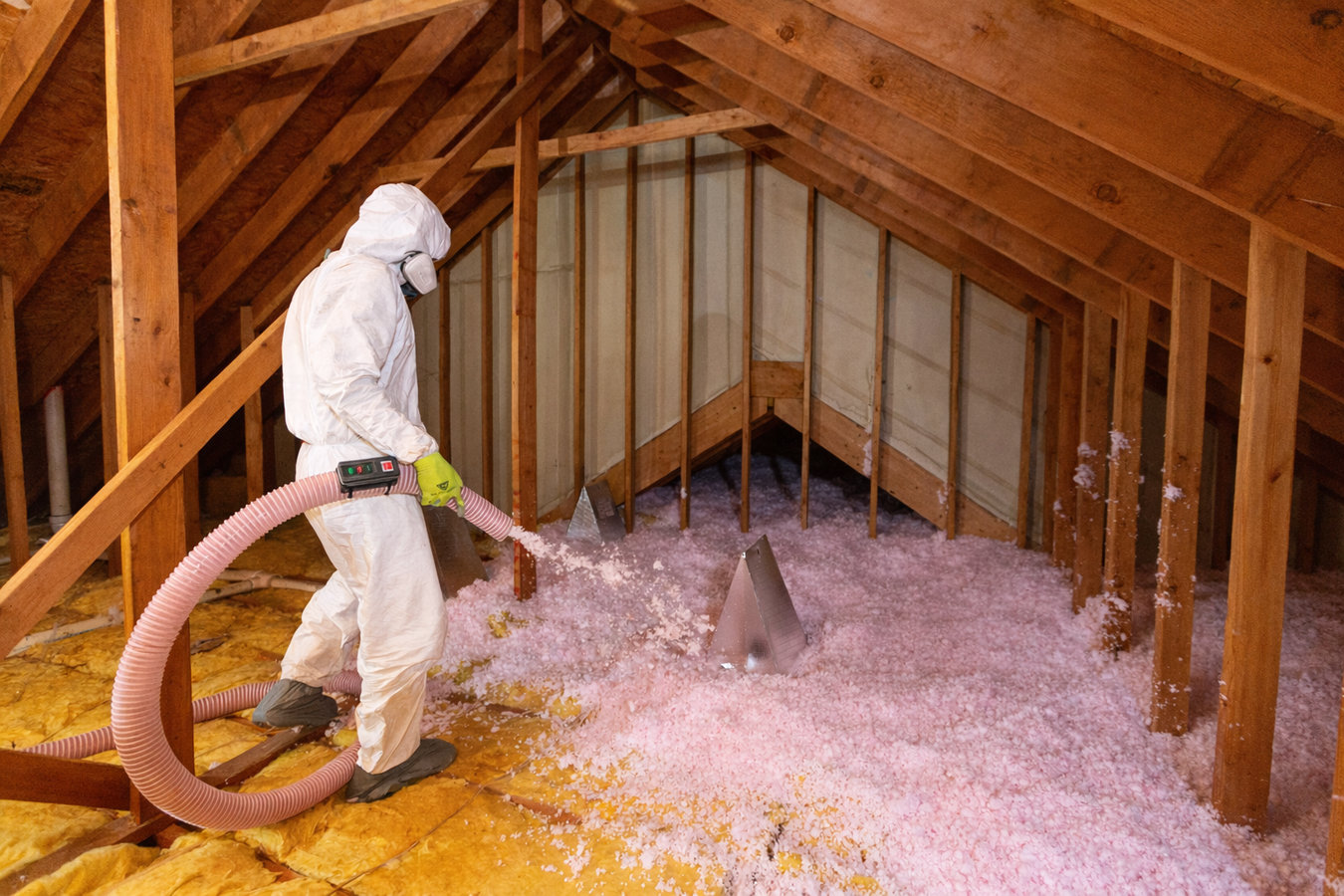
Old or thin attic insulation lets heat escape through your ceiling all winter long. Blown-in insulation fills every gap and corner so your home stays warm and your heating bill stops climbing.
Blown-in insulation in State College fills your attic floor with loose material - usually fiberglass or cellulose - that covers every corner and gap a standard batt cannot reach. Most attic jobs are finished in a single day, and you can stay home while the work is done.
A lot of homes in Centre County were built between the 1950s and 1980s, when insulation standards were far lower than today. If your house is from that era and has never had insulation work done, you are almost certainly losing heat through the ceiling every winter. The fix is straightforward: a contractor blows in enough material to bring your attic up to the level Pennsylvania winters actually require.
If you are also dealing with drafts around windows or cold floors above an unheated crawl space, our home insulation service covers the full picture. And if your attic has visible air gaps around fixtures or pipes, pairing blown-in material with attic insulation work - including proper air sealing first - delivers the best long-term results.
If your gas or electric bills climb sharply from November through March and do not respond much to adjusting the thermostat, heat is escaping through your attic. State College winters run six months long, so even modest heat loss adds up to hundreds of dollars a year. This is the most common reason homeowners in older Centre County homes call an insulation contractor.
Stand in your top-floor rooms on a cold January morning. If the ceiling feels noticeably cooler than the walls, or if upstairs rooms are harder to keep warm, your attic insulation is likely thin or missing in spots. This is especially common in State College homes built before 1980, where original insulation has compressed over the decades.
Ice dams form when heat escaping through a poorly insulated attic melts snow on the upper roof, and that water refreezes at the cold eaves. State College gets enough snow and cold for this to be a real risk - and ice dams can force water under your shingles and into your ceilings if left alone.
If you look into your attic and can see the tops of the wooden joists above the insulation, you are below the level needed for a Pennsylvania winter. Even if you cannot see the joists, anything less than 10 to 12 inches of existing material is worth having a contractor evaluate. Homes built before 1990 here are very commonly in this situation.
We use blown-in insulation primarily for attics, where the loose material conforms around existing framing, old insulation, and any obstacles in the space. Before any material goes in, we air seal the openings - gaps around light fixtures, plumbing pipes, and electrical runs - because insulation sitting on top of an open gap does not stop air movement. That step is what separates a job that actually performs from one that looks complete but still leaves you cold.
We carry both fiberglass and cellulose blown-in materials and will recommend the right product for your attic based on what is already there and what your home needs. Our home insulation service extends this approach to crawl spaces, basement rim joists, and other areas that affect whole-home comfort. For an integrated approach to stopping air movement from top to bottom, see our attic insulation work, which covers full attic assessments and air sealing as a bundled service.
Best for homes with accessible attic hatches and existing framing that can support loose-fill coverage.
Suited to any home where gaps around fixtures or pipes are letting conditioned air escape into the attic.
Ideal for homes with some existing insulation that is below current recommended depth for Pennsylvania winters.
Right for homeowners who are unsure what they currently have and want a clear picture before committing to any work.
State College sits in Climate Zone 5 - one of the colder zones in the continental U.S. Temperatures regularly drop into the single digits in January and February, and the heating season runs from October through April. That is six months of meaningful heating costs, which means even a modest improvement in how well your attic holds heat pays back quickly. The freeze-thaw cycles that Central Pennsylvania winters bring also gradually open up gaps around pipes and fixtures in older homes, making air sealing before insulation more important here than in milder climates.
The older housing stock in the area - particularly homes built in the 1960s and 70s near campus - was insulated to the minimum standard of that era, which falls far short of what is recommended today. If you live in one of the townships surrounding State College, like those served by our team in Bellefonte, PA or Lock Haven, PA, the housing stock and climate conditions are similar - and the need is just as real. The ENERGY STAR Seal and Insulate program estimates homeowners who properly insulate and air seal can save an average of 15% on total heating and cooling costs.
We respond within 1 business day. You'll answer a few basic questions - your address, home age, and what is prompting the call - then we schedule a time to come take a look. No commitment required at this stage.
A contractor visits your home and goes up into the attic to measure the space and check what is already there. They will note any air gaps that should be sealed first and walk you through their findings before they leave. This visit is free and takes 30 to 60 minutes.
You receive a written quote spelling out the scope of work, materials, target R-value, and whether air sealing is included. If air sealing is not mentioned, ask - it is a critical part of a complete job. No add-ons after you sign.
The crew arrives, lays protective coverings near the attic hatch, and runs the blow hose up into the attic. For a typical State College attic, the actual blowing process takes one to three hours. Before leaving, they confirm depth at multiple points and walk you through the completed work.
We respond within 1 business day - no obligation. After you submit, someone from our office will call to schedule a free on-site estimate at your home. We will walk through what you have, what you need, and give you a written quote before any work begins.
(814) 996-0035We put the scope, materials, and cost in writing before any work starts, and coordinate any permits your job needs. You get a clear record of the finished work, so you know exactly what was done and why.
Many contractors skip air sealing to save time. We do it on every attic job because insulation sitting on top of an open gap still lets warm air escape. Skipping that step is why some homeowners do not feel much difference after paying for insulation.
We work throughout State College and the surrounding region - from Bellefonte and Lock Haven to Altoona and Lewisburg. Local knowledge matters when your housing stock, climate, and building styles are as specific as they are in Centre County.
You will receive a written quote that breaks down materials, coverage level, and total cost before any work starts. We do not add charges after the fact, and we do not pressure you to decide on the spot. Call us, and the next step is just a conversation.
Every one of these points comes back to the same thing: we treat your home like a home. If you want to know more about our credentials and how we work, visit our about page. If you are ready to get a quote, call us or fill out the form above.
More information on insulation standards is available from the U.S. Department of Energy insulation guide.
A whole-home insulation assessment covering attic, crawl space, and rim joists so every part of your home holds heat through a Pennsylvania winter.
Learn moreComprehensive attic insulation service that pairs blown-in material with air sealing for results that last well beyond the first cold season.
Learn moreCall State College Insulation today - most State College attic jobs are completed in a single day, and your home will feel the difference in the first cold snap after installation.