
Loading...
Serving State College, PA and surrounding areas. (814) 996-0035
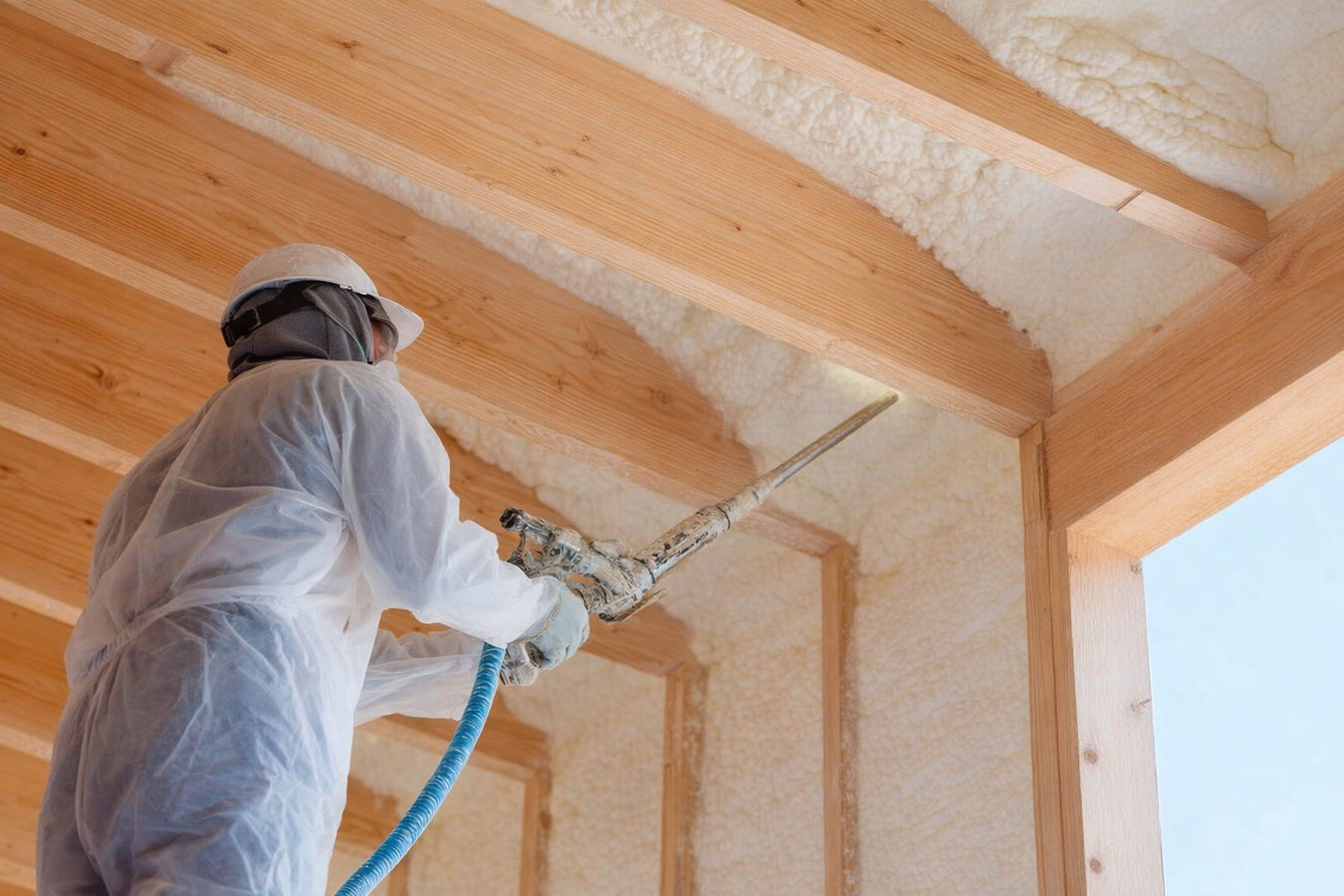
State College Insulation works in Altoona on homes that most contractors find tricky: old brick row houses, pre-1940 worker cottages on sloped lots, and postwar homes that have never had proper insulation in the crawl space or attic. We offer spray foam insulation, attic blown-in work, crawl space insulation, and air sealing - and we have been serving Blair County homeowners since our founding.
Most pre-1940 Altoona homes have crawl spaces, rim joists, and basement band joists that were never insulated - or have old fiberglass that has long since compressed and lost most of its value. Our spray foam insulation fills irregular gaps in older framing and creates a sealed barrier that holds up through Altoona's freeze-thaw cycles - something fiberglass batts in older brick homes simply cannot do.
Altoona averages 60 to 70 inches of snow per year, and an under-insulated attic turns every cold snap into a direct hit on your heating bill. Many homes in older Altoona neighborhoods have only a few inches of compressed, aging insulation in the attic - well below the level recommended for a Pennsylvania mountain-valley climate. Bringing that up to today's standard is often the single most impactful thing an Altoona homeowner can do to reduce energy costs.
Hillside lots are common across Altoona, and homes built on sloped terrain often have crawl spaces or partial basements where cold air enters freely from the downhill side. Wet springs driven by snowmelt combine with that exposure to create both cold floors above and moisture problems below. Insulating and sealing the crawl space addresses both issues at the foundation level, where they actually start.
For Altoona attics in older row houses and worker cottages - where access may be tight and framing irregular - blown-in insulation reaches corners and odd-shaped spaces that batts cannot cover cleanly. It is also the most practical way to add coverage on top of existing material without tearing anything out, making it a good fit for Altoona homeowners who want better energy performance without a major renovation.
Many Altoona homes have full or partial basements rather than crawl spaces - and in homes over 80 years old, those basement walls and rim joists are often completely uninsulated. An uninsulated basement is a direct cold bridge to the first floor, especially in a mountain climate where temperatures drop below 10 degrees in January. Basement insulation closes that gap and makes the whole home easier to heat.
Older Altoona homes - built when airtightness was not a design priority - often have dozens of small gaps around pipes, wires, chimneys, and framing connections that let cold air in all winter. Sealing those gaps before adding insulation is what makes the insulation actually work. In a home that has never had air sealing done, this step alone can make a noticeable difference in how the house feels on a cold day.
Altoona sits in a mountain valley in the Allegheny range, with Brush Mountain rising sharply to the west and uneven terrain spreading across the city. The climate is harder than most of Pennsylvania - the city averages 60 to 70 inches of snow per year, temperatures in January regularly fall below 10 degrees Fahrenheit, and the freeze-thaw cycles through winter and early spring put constant stress on concrete, masonry, and anything that absorbs moisture. For a home with older construction, that means crawl spaces and rim joists are being worked on all winter long by temperature swings they were never designed to handle.
The housing stock compounds the problem. A large share of Altoona's homes were built before 1940, during the city's railroad boom, and those homes reflect the construction standards of that era - plaster walls, single-pane windows, and minimal insulation by today's measures. Whole neighborhoods near downtown and the old railroad shops are filled with attached row houses and worker cottages on narrow lots with limited side access. The combination of very old construction and a very cold mountain climate means that insulation deficits here are not a small inconvenience - they translate directly to high heating bills and comfort problems that persist all winter.
Altoona is a city where most of the homes are over 80 years old, and working on those homes means knowing what to expect: tighter spaces, brick construction, and older framing that does not always match what newer tools assume. We are familiar with the permit requirements for insulation and renovation work in Blair County and work with the City of Altoona when a project scope calls for it.
The city runs along a natural valley, with the main commercial areas concentrated near the downtown core around the Railroaders Memorial Museum and spreading east and north through residential neighborhoods. The hillside streets above downtown - where sloped lots and retaining walls are standard - are a different environment than the flatter neighborhoods to the east near Lakemont Park. Both require attention to drainage and how water moves around the foundation, especially during wet springs when snowmelt and April rain arrive together.
We serve homeowners in nearby Huntingdon, about 30 miles southeast on Route 22 - another Pennsylvania town with older housing stock and a climate shaped by its mountain valley setting. We also work in Tyrone, a smaller community roughly 15 miles northeast of Altoona along the Little Juniata River, where many of the same pre-1940 housing challenges show up in a more compact setting.
We ask a few questions about your home - age, what area you want addressed, and any specific problems you have noticed. We respond within 1 business day and schedule a free in-person walk-through. Altoona homes vary a lot depending on the neighborhood and era of construction, so we need to see the space before we can give you an honest number.
We visit to inspect the areas you want insulated - checking existing insulation, moisture conditions, access points, and framing. For older Altoona homes, that walk-through often reveals more than the homeowner expected, which is why we explain everything we see before recommending an approach. The assessment is free, and no work is started until you have a written estimate you are comfortable with.
You receive a written estimate specifying exactly what areas will be treated, what materials are used, and the total cost. If a permit is required for your project, that will be noted and handled by us, not left to you. Take the time to read the estimate carefully and ask questions before agreeing to anything.
Most Altoona jobs are completed in one day. For spray foam, plan for you and your household to be out of the treated space for about 24 hours while the material cures. When we finish, we walk you through exactly what was done and answer any questions about what to expect going forward - no guessing on your end.
We work on all types of Altoona homes - old brick row houses, hillside properties, worker cottages near downtown, and postwar ranches on the east side. Free estimates, no pressure, and a response within 1 business day. Call or send us a message to get started.
(814) 996-0035Altoona is a mid-size city of about 43,000 people in Blair County, tucked into a valley in the Allegheny Mountains with Brush Mountain rising to the west. The city was built almost entirely around the Pennsylvania Railroad, which established its main repair shops here in the 1850s and laid out whole neighborhoods of row houses and worker cottages to house the people who worked in them. That history is still visible in the streetscapes near downtown - and at the Horseshoe Curve, a National Historic Landmark just a few miles west of downtown where the old railroad bends around the mountain. Census data shows that most of the city's housing was built before 1940, and a majority of occupied units are owner-occupied, which means homeowners here have a real stake in keeping their properties well maintained.
The residential neighborhoods spread across uneven terrain - from the hillside streets above downtown where retaining walls and sloped lots are standard, to flatter areas to the east near Lakemont Park, a historic amusement park that has anchored that part of the city for over a century. Brick and wood frame construction are both common, and many homes have brick chimneys and masonry foundations that reflect the building materials available during the railroad era. Homeowners throughout Blair County - and in nearby communities like Huntingdon to the southeast - face similar challenges with older construction and a demanding mountain climate.
Keep conditioned air in and outdoor temperatures out with proper attic insulation.
Learn moreLoose-fill insulation that reaches every corner for even, thorough coverage.
Learn moreSafe removal of old, damaged, or contaminated insulation before re-insulating.
Learn moreProtect floors and pipes from moisture and cold with crawl space insulation.
Learn moreInterior and exterior wall insulation for better comfort and sound control.
Learn moreStop drafts and air leaks that waste energy and reduce indoor comfort.
Learn moreDense, moisture-resistant closed-cell foam with the highest R-value per inch.
Learn moreLightweight open-cell foam ideal for interior walls and sound dampening.
Learn moreCommercial-grade insulation for offices, warehouses, and retail spaces.
Learn moreHeavy-duty vapor barriers that block ground moisture from entering your home.
Learn moreProfessional installation of vapor barriers in crawl spaces and basements.
Learn moreSeal attic bypasses and penetrations before adding insulation for best results.
Learn moreCall us or send a message to schedule a free walk-through. We know older homes, mountain winters, and hillside lots - and we will give you a straight assessment of what your home needs.