Loading...
Serving State College, PA and surrounding areas. (814) 996-0035
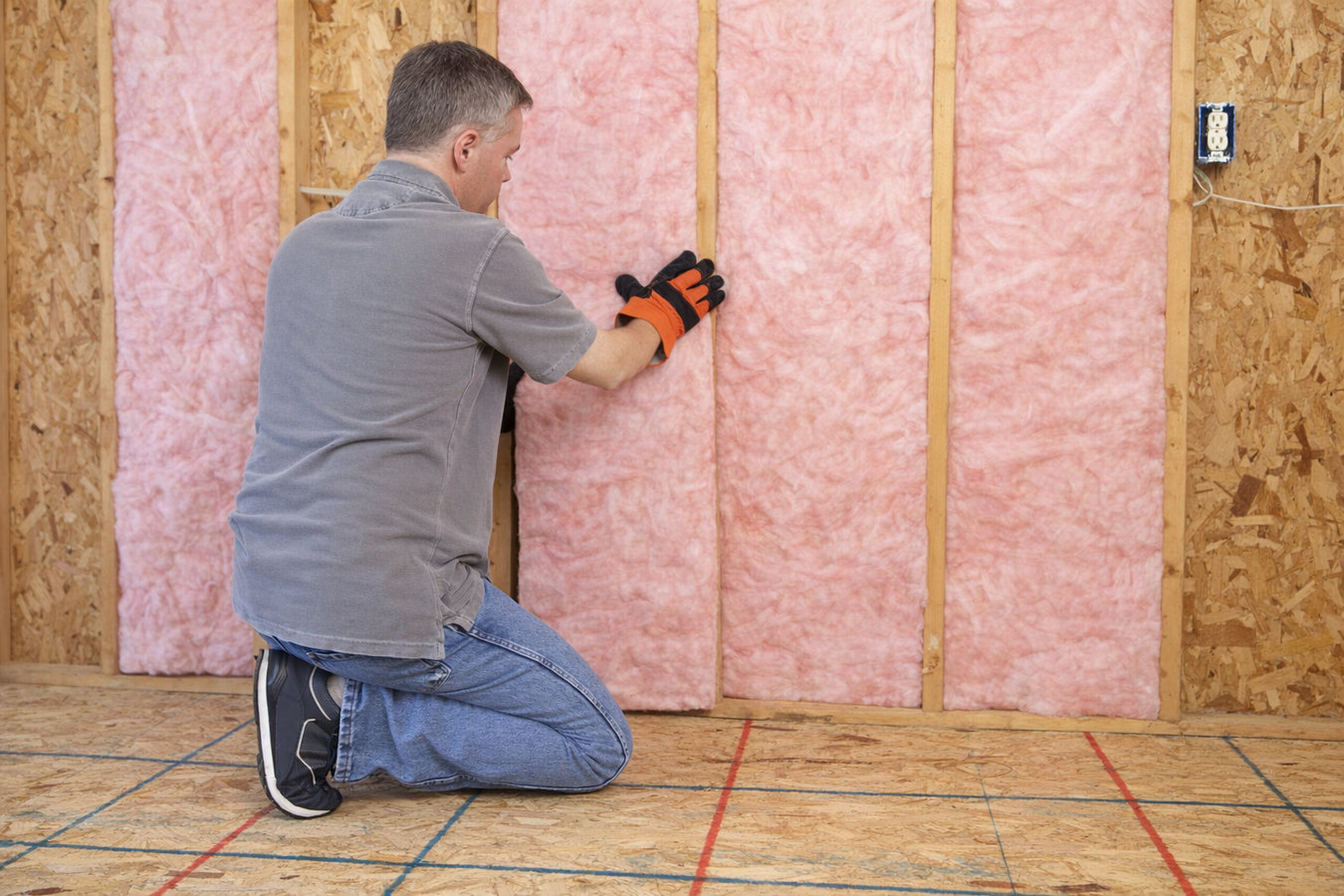
Rooms near exterior walls that never quite warm up are a sign your wall cavities are empty or failing. We fill them with the right material so your whole house finally stays comfortable.
Wall insulation in State College fills exterior wall cavities with a material that slows heat flow - most jobs on a single-story home are finished in one to two days using a blown-in method that requires no open walls. The result is a home where every room stays closer to the temperature on your thermostat, and your furnace does not have to run continuously to compensate for heat escaping through empty stud bays.
A large share of State College homes - particularly those built between the 1940s and 1970s near campus and the borough core - were constructed with little or no wall insulation by today's standards. If your home falls into that category, the walls may have been leaking heat and driving up your bills every winter without you realizing it. Addressing this is one of the highest-impact upgrades available to owners of older homes in this area.
Wall insulation works best when it is paired with proper air sealing services, because insulation slows heat transfer while air sealing stops air movement. Together, they address the two main ways your home loses heat through its walls. If you want to know where your home stands before committing to anything, a free walk-through will give you a clear picture.
If your gas or electric bill climbs sharply from November through March and never seems to improve year over year, your walls may be letting heat escape faster than your furnace can replace it. State College winters run nearly six months, and under-insulated walls are working against your heating system the entire time.
Place your hand flat against an exterior wall on a cold January day. If it feels noticeably cold, the wall cavity behind it is likely empty or under-filled. This is especially common in State College homes built before the 1980s, where wall insulation was minimal or nonexistent by today's standards.
Electrical outlets and switches on exterior walls are small openings into your wall cavity. If you feel a cold draft coming through them on a windy winter day, air is moving freely through your walls, which means heat is moving with it. This is a direct, touchable sign that your wall cavities need attention.
Homes built in the 1970s or earlier were constructed under very different energy standards than homes built today. If you live in one of State College's older neighborhoods and have no record of insulation work, there is a strong chance your walls are significantly under-insulated. An assessment will tell you exactly what is there.
We install wall insulation in existing homes using methods that work with finished walls - no demolition required. For most State College homes, dense-pack blown-in insulation is the right approach. We drill small access holes into each wall cavity, inject material under pressure so it fills the space completely without gaps, then patch and finish every hole. The process is far less disruptive than most homeowners expect, and the difference is immediately noticeable on the next cold snap.
In homes where air movement is a significant part of the problem, we also offer air sealing services as a complement to wall insulation. And for homeowners who want to upgrade their entire home's thermal performance at once, we can combine wall insulation with blown-in insulation in the attic as part of a single project. Every job starts with an honest assessment, not a canned quote.
Best for existing finished walls - fills cavities completely without requiring demolition or open walls.
Ideal for homeowners who want to upgrade all exterior walls in a single project for consistent coverage.
A low-expansion foam alternative for walls where blown-in material is difficult to install due to layout.
For homeowners whose walls also have air movement problems that insulation alone cannot fully address.
Suited for homeowners replacing siding who want to add continuous insulation while the walls are accessible.
For older homes with no wall insulation that want all exterior walls addressed in a single coordinated project.
State College sits in Pennsylvania's Climate Zone 5, which means long, cold winters with average January lows that regularly drop into the teens and colder during cold snaps. That kind of sustained cold puts constant pressure on under-insulated walls. Homes in and around the borough - particularly in neighborhoods near Penn State's campus that were built before the 1980s - were often constructed with little or no wall insulation by modern standards, and many have never been updated. For homeowners in those areas, empty or under-filled wall cavities represent one of the largest sources of heat loss in the entire building.
PPL Electric, which serves the State College area, offers energy efficiency rebates for qualifying insulation improvements that can meaningfully reduce your project cost. We serve homeowners throughout Centre County and the surrounding region, including in Bellefonte and Lewistown, where the same older housing stock and cold winters create the same set of problems for homeowners.
Call or submit a request online and we will ask a few basic questions - roughly when your home was built, whether you have noticed specific comfort problems, and what is prompting you to call now. We respond within 1 business day and schedule a free in-home visit, because the actual condition of your walls determines the right scope of work.
A crew member visits to look at your walls, check for existing insulation and moisture issues, and assess access options. This visit takes about 30 to 60 minutes. You will receive a written estimate that explains exactly which walls are being addressed, what material will be used, and what the total cost will be - before anyone picks up a drill.
The crew arrives, sets up equipment, and begins drilling small access holes into each wall cavity from the exterior or interior depending on your home. Material is injected until each cavity is filled, then every hole is patched and painted to match as closely as possible. Most single-story homes are completed in a single day.
Before the crew leaves, we walk through the completed work with you, show you the patched areas, and answer any questions. If you are pursuing a PPL Electric rebate or federal tax credit, we provide the documentation you need to submit your claim - so you do not have to chase paperwork after the fact.
Free in-home estimate. Written quote before any work begins. No pressure.
(814) 996-0035A quality wall insulation job fills every wall cavity without gaps or voids, because even a small gap can allow significant heat loss. We verify fill coverage on every job - if a cavity is not fully packed, we know before we leave, not after you call us back wondering why one room is still cold.
PPL Electric serves the State College area and offers rebates for qualifying insulation work. We know the program requirements, help you document the project correctly, and make sure you capture available savings. A lot of homeowners leave this money on the table simply because their contractor did not know to ask.
A large share of State College homes were built before modern energy codes, which means irregular wall cavities, mixed materials, and surprises behind finished surfaces. We have worked in enough of these homes to know what to expect and how to work around it without adding unexpected costs to your project.
Our crews bring years of hands-on experience insulating central Pennsylvania homes. We put the scope and materials in writing and coordinate any permits your project needs before the work begins.
Every one of these points comes back to the same thing: you should know exactly what you are getting before the crew shows up, and you should be able to verify the work when they leave. That is the standard we hold ourselves to on every wall insulation job in State College and the surrounding area.
For guidance on insulation standards and R-values for Pennsylvania homes, see the U.S. Department of Energy insulation guide.
Close the hidden gaps that let heated air escape even after your walls are insulated, for maximum energy savings.
Learn moreLearn how the blown-in method works for attics and walls - the same approach used to fill existing cavities with minimal disruption.
Learn moreState College winters are long and cold - every month you wait is another month of heat escaping through empty wall cavities. Call now or request a free estimate online.