
Loading...
Serving State College, PA and surrounding areas. (814) 996-0035
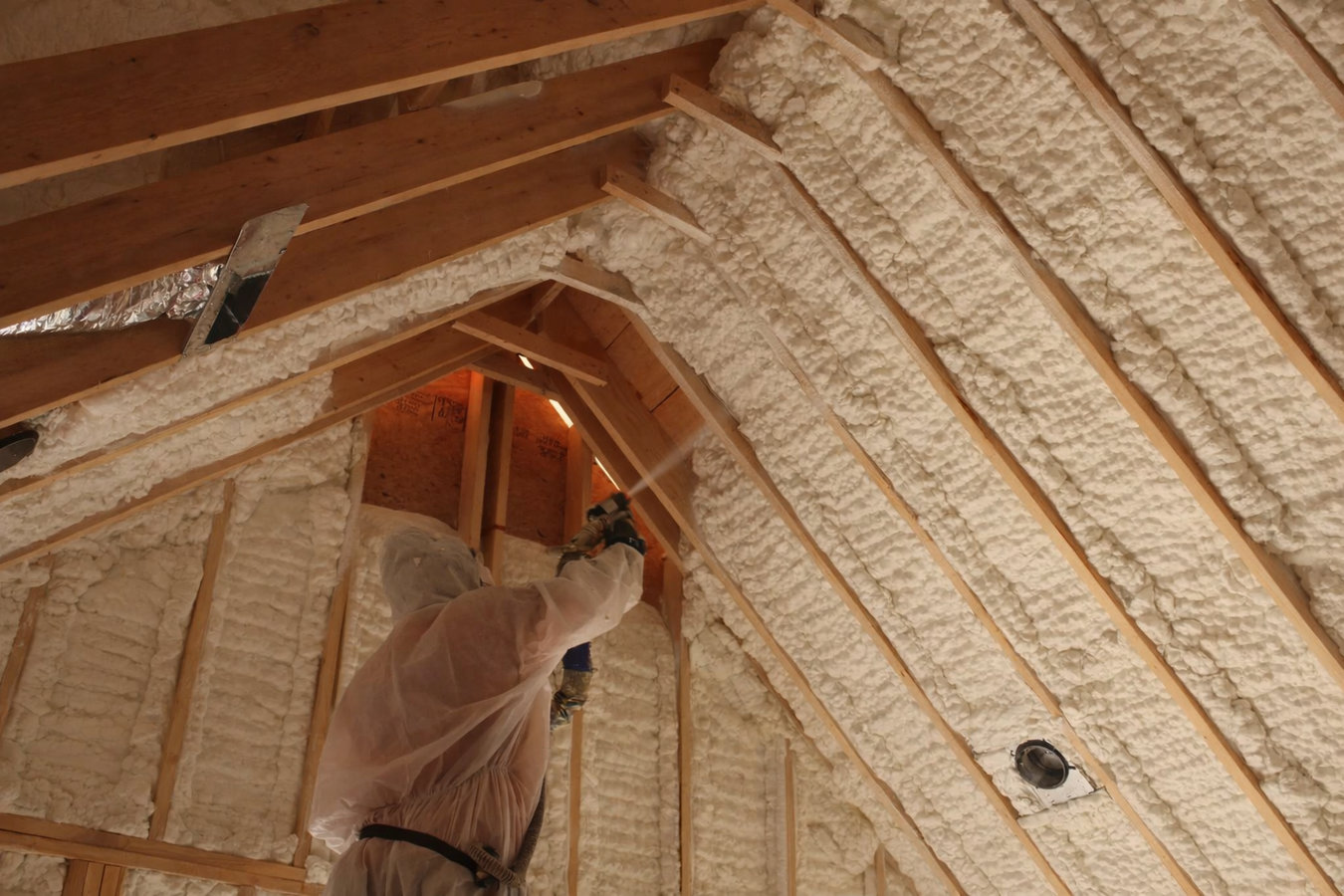
Drafty rooms, cold floors, and heating bills that climb every November are signs your home has gaps insulation batts can not reach. Open-cell foam expands to fill them all - no voids, no thin spots.
Open-cell foam insulation in State College is sprayed as a liquid that expands up to 100 times its original size, fills every gap and cavity it touches, and cures into a soft barrier that slows heat flow - most residential jobs are completed in a single day, with a 24-hour re-entry window while the foam finishes curing. The result is a tighter home that holds temperature more consistently, without the voids and missed spots that batt insulation leaves behind.
A large share of homes in State College and the surrounding Centre County townships were built before modern insulation standards existed. The rim joist above your foundation, knee walls in a finished attic, and the floor above a crawl space are common problem areas in these older homes - places where batts sag, shift, or never fully covered the space. Open-cell foam is designed for exactly these situations. If you are also dealing with air movement through cracks and penetrations, pairing foam insulation with dedicated spray foam insulation techniques is often the most effective approach.
Every home is different, so we walk through the space before we quote the job. Call us and we will tell you honestly whether open-cell foam is the right fit or whether a different product would serve you better.
If your gas or electric bill climbs sharply from October onward and you have not changed how you heat your home, heat is escaping somewhere. In State College's long heating season, even a modest gap in your insulation adds up to real money over five or six months. This is one of the most common signals that your attic, rim joist, or wall cavities need attention.
If one bedroom, a finished attic space, or a room above a garage is always colder than the rest of the house in winter, the insulation in that area is likely thin, missing, or damaged. This is especially common in older State College homes where additions were built at different times and insulation was never brought to a consistent standard throughout.
If you can feel cold air moving through an electrical outlet on an exterior wall, see light coming through a gap around a pipe, or notice frost forming on the inside of a wall in January, your home has a significant air leak. Open-cell foam is specifically designed to seal these kinds of penetrations, which are very common in the older wood-frame homes that make up much of State College's housing stock.
Most homes built before the 1990s in Pennsylvania were insulated to standards now considered inadequate by today's energy codes. If you have never had an insulation inspection and your home is older, there is a reasonable chance you are heating through gaps a modern foam job would close. A quick look at your attic is a first step any homeowner can take themselves.
We install open-cell foam in attics, rim joists, wall cavities, crawl spaces, and anywhere else your home is losing heat through gaps that traditional insulation cannot fill. The material is soft, effective, and ideal for the irregular framing found in older homes throughout Centre County. For homes where closed-cell foam or a vapor-resistant product is a better fit - such as a basement wall or an area with moisture exposure - we will tell you that during the assessment rather than selling you the wrong product. You can learn more about how open-cell compares to other spray options on our spray foam insulation page.
For commercial buildings - offices, retail spaces, and mixed-use properties that share the same insulation challenges as older homes - we offer commercial insulation services using spray foam and other materials suited to larger or occupied spaces. Every project starts with a walkthrough so we understand the space before we quote the job.
Best for homeowners who want to insulate the attic floor and seal around penetrations in a single pass.
Targeted application for the band of wood above your foundation - one of the highest-return areas in older homes.
Suited for existing finished walls where blown-in or foam can be injected without removing drywall.
For homeowners with cold floors, open-cell foam along the floor joists creates a continuous thermal barrier.
Addresses finished attic spaces where knee walls and access hatches are common sources of heat loss.
For older homes that want all major problem areas addressed in a single coordinated insulation project.
State College sits in a valley in central Pennsylvania where winter temperatures regularly drop into the teens and single digits, and the heating season runs from October through April. That is six months of sustained cold during which every gap in your home's envelope is costing you money. Older homes in the borough and surrounding townships were built well before modern insulation standards existed, and many still have rim joists, attic knee walls, or crawl space floors that were never properly insulated. open cell foam insulation is particularly effective in these situations because it expands to fill whatever it encounters - including the irregular gaps and settled framing that is common in mid-20th-century construction.
Centre County also experiences dozens of freeze-thaw cycles each winter, where temperatures swing above and below freezing repeatedly. That movement slowly opens cracks and gaps in older wood framing, which open-cell foam seals in a way that holds even as the building shifts. We serve homeowners throughout the region, including in Bellefonte and Tyrone, where the same older housing stock and cold winters create the same set of problems. If you are not sure whether your home is a good candidate for open-cell foam, a free walk-through will give you a clear answer.
We ask a few basic questions - what area of the home you want insulated, whether it is new work or an upgrade, and roughly how old your home is. We will schedule an on-site walk-through before giving you a price. We reply within one business day.
We walk through the areas you want insulated, measure the space, and check for any moisture or structural issues that need to be addressed first. This visit takes 30 to 60 minutes. Ask questions freely - we explain what we find in plain terms.
After the assessment, we provide a written quote that breaks down what areas will be covered, how thick the foam will be applied, and the total cost. The quote will also note whether a permit is required and who pulls it - no surprises.
The crew arrives, protects surfaces, and sprays the foam in passes. Most residential jobs take a few hours. You will need to stay out of the treated area for at least 24 hours while the foam cures. We give you the exact re-entry time in writing before we start.
No obligation. We walk through the space, explain what we find, and give you a written price - before you commit to anything.
(814) 996-0035Pennsylvania requires building permits for most insulation work, and we handle the permit process on every job - no exceptions. Permitted work gets inspected, which protects you when you sell, refinance, or file an insurance claim. A contractor who suggests skipping the permit is one to walk away from.
We follow installation and safety guidelines from the Spray Polyurethane Foam Alliance, the national trade organization for this industry. That means proper mixing ratios, correct thickness, and appropriate protective measures during application - not shortcuts learned on the fly.
We cover State College and 11 surrounding communities across Centre County and the region. You get a contractor who knows the local housing stock, understands the permit process in each municipality, and is not sending a crew from three hours away.
Your quote shows what areas we cover, what thickness we apply, whether a permit is included, and the total cost. We do not add charges on installation day that were not in the written quote. If we find something unexpected during the assessment, we tell you before we schedule the work.
Every one of those points comes back to the same thing: when you hire us, the job is done to a standard that holds up over time and under inspection. That is what fair-dealing looks like in this trade.
Pennsylvania permit requirements are administered through local building departments. You can learn more about insulation safety standards from the U.S. Environmental Protection Agency.
Office and retail buildings lose heat the same way homes do - we handle commercial spray foam and insulation upgrades across Centre County.
Learn moreCompare open-cell and closed-cell foam options to find the right fit for your specific project and budget.
Learn moreOpen-cell foam seals the gaps your current insulation misses. Every month you wait is another month of avoidable heat loss - get your free estimate now.