
Loading...
Serving State College, PA and surrounding areas. (814) 996-0035
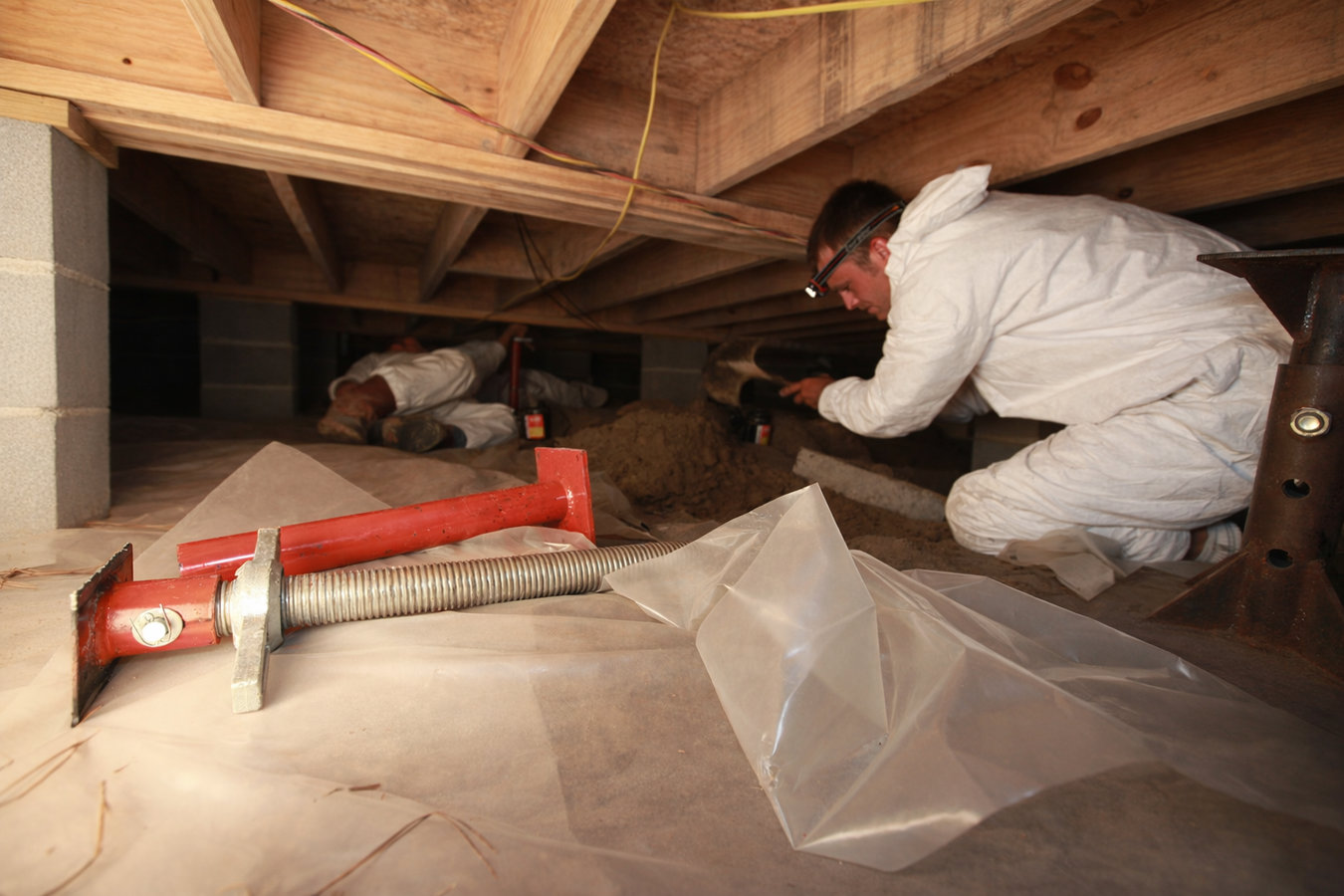
Ground moisture rising through an unprotected crawl space damages floors, raises humidity, and drives up your heating bill. We install vapor barriers that stop it for good.
Vapor barrier installation in State College places heavy-duty plastic sheeting across the floor - and sometimes walls - of your crawl space to block ground moisture from rising into your home. Most jobs take one full day for an average crawl space, with larger or harder-to-access spaces running two days.
The problem is straightforward: unprotected soil under your home is always releasing moisture upward. Centre County's clay-heavy soils hold water far longer than sandy soils, which means every rainstorm or spring thaw keeps that moisture pressure elevated for weeks. Without a barrier, that moisture travels into your wood subfloor, your insulation, and the air your family breathes. For homes over 40 years old - and there are many near Penn State's campus - this has been happening for decades. Pairing vapor barrier installation with attic air sealing addresses moisture from both directions and is one of the most complete ways to improve indoor air quality in an older State College home.
The symptoms most homeowners notice first are a musty smell in spring, cold floors in winter, or a humidity reading that is always too high. The fix starts with a free in-person inspection of your crawl space - we look at what is there, explain your options, and give you a written estimate before any work begins.
If your hardwood or laminate floors feel noticeably cold underfoot during State College's long winters, or if certain spots feel slightly spongy when you walk on them, moisture from below may be the cause. Ground moisture rising into a crawl space can slowly damage the wood subfloor above it, and the first sign is often a change in how the floor feels. This is especially common in older homes near campus built without any crawl space protection.
A persistent earthy or musty odor that intensifies after snowmelt in March and April is one of the clearest signs that moisture is building up in your crawl space. In State College, the combination of clay soils and heavy spring runoff means this smell often appears right after the ground thaws. If you notice it coming from floor vents, closets near exterior walls, or the basement stairwell, it is worth having someone take a look.
If you have ever shined a flashlight into your crawl space and seen water droplets on pipes, dark staining on wood beams, or pooling on the ground, moisture is already a problem. These are visible signs that the ground is releasing moisture into the space faster than it can escape. Wet wood under your home is a problem that compounds quietly over time - the longer it goes unaddressed, the more expensive the repair.
When crawl space insulation gets damp - which happens when there is no vapor barrier keeping ground moisture out - it loses much of its ability to keep heat inside your home. If your gas or electric bills have been climbing over the past few winters without a clear explanation, a compromised crawl space could be part of the reason. State College winters are long and cold enough that even a modest drop in insulation performance adds up quickly.
We install vapor barriers in crawl spaces and basements throughout the State College area, using heavy-duty polyethylene sheeting in the thickness that matches your home's moisture load. The crew clears any debris from the crawl space floor, lays the plastic across the entire surface, overlaps seams by at least 12 inches, and tapes every joint. Edges are secured to the foundation walls and wrapped around posts and piers - the spots where loose installations fail first. For homes with severe or persistent moisture, we discuss full encapsulation, which adds wall coverage and often a dehumidifier. We also connect this work naturally with crawl space vapor barrier service when a homeowner wants to treat multiple areas of the home at once.
Material thickness matters more than most homeowners realize. A 6-mil sheet is the minimum most building science professionals recommend - we default to thicker grades for homes in clay-heavy soil areas or with a history of standing water. The U.S. Department of Energy and the Building Science Corporation both recommend sealing crawl spaces to control moisture effectively - and both emphasize that seam quality and wall coverage are what separate a good installation from one that lets moisture through at the gaps.
Best for homes with vented crawl spaces and moderate moisture - provides the foundation of any moisture management strategy.
Right for homes with a history of standing water, high humidity, or persistent mold - seals floor, walls, and vents for complete moisture control.
Recommended when Centre County's humid summers mean a barrier alone may not maintain safe humidity levels in a sealed crawl space.
The right starting point for any older State College home where the crawl space condition is unknown before committing to installation.
State College gets around 40 inches of precipitation per year, including heavy snowfall that can exceed 40 inches in a typical winter. When that snow melts in late winter and early spring, the ground becomes saturated - and because much of Centre County sits on clay-heavy soil that holds water rather than draining it quickly, that moisture stays near the surface for weeks. For homeowners in State College and the surrounding area, this makes vapor barrier installation one of the most practical home improvements you can make. Every spring thaw without a barrier is another season of ground moisture working on the wood structure under your floors.
The age of the housing stock here compounds the problem. Many homes in the established neighborhoods surrounding Penn State's campus - College Heights, Holmes Foster, the Highlands - were built between the 1940s and 1970s, long before crawl space moisture protection was a standard part of construction. Homeowners in Lewistown and other Centre County communities deal with the same combination of old housing stock and persistent soil moisture. If you bought a home that was previously rented, the crawl space may never have been inspected - and getting a professional assessment before winter is one of the most cost-effective things you can do.
When you reach out, we ask a few basic questions - the size of your home, whether you have a crawl space or basement, and what you have noticed. Most State College homeowners hear back within one business day. You do not need to prepare anything for this call.
A contractor visits and inspects the crawl space in person - this usually takes 30 to 60 minutes. We look at the current soil condition, check for existing moisture damage, and measure the space. This is also your chance to ask questions before committing to anything.
After the visit, you receive a written estimate that breaks down the cost of materials and labor. We explain what we are recommending and why - basic floor cover or full encapsulation. Take your time comparing estimates if you are getting more than one.
On installation day, the crew works entirely in the crawl space. Most jobs finish in a single day. Before leaving, we walk you through the finished installation - showing you how seams are sealed and what to watch for going forward.
No pressure, no commitment. We inspect your crawl space, show you what we find, and give you a clear written quote. Most State College homeowners hear back within one business day.
(814) 996-0035We never price vapor barrier work over the phone. A contractor physically enters the crawl space, assesses the soil and moisture conditions, and measures the space before giving you a number. That is how you get a price that reflects what the job actually requires.
We work across all 12 service areas from State College to Tyrone, Bellefonte, Lewistown, and beyond. Local contractors who know Centre County's clay soils and freeze-thaw patterns bring a more accurate read on what your specific home needs than out-of-area companies.
Not every crawl space needs the same thickness of plastic. We assess the moisture conditions in your specific space and recommend a material grade - from standard 6-mil to heavy-duty 20-mil - that will actually hold up. The right material installed correctly lasts 20 years or more.
You get a free written estimate that breaks down the scope, materials, and cost before we start. We document the work as we go and coordinate any permits your project needs, so you have a clear record of what was done.
A quality vapor barrier installation is one of those improvements that pays for itself quietly - lower heating bills, less moisture damage, cleaner indoor air. We have done this work in State College's oldest neighborhoods and its newest subdivisions, and the standard of installation does not change based on the size of the job.
Seal the gaps in your attic floor to stop conditioned air from escaping and unconditioned air from entering your living space.
Learn moreFocused crawl space moisture protection using thick polyethylene sheeting, from basic floor coverage to full encapsulation.
Learn moreState College's freeze-thaw season starts in November. Schedule your free estimate now and get your vapor barrier installed before the ground moisture pressure peaks.