
Loading...
Serving State College, PA and surrounding areas. (814) 996-0035
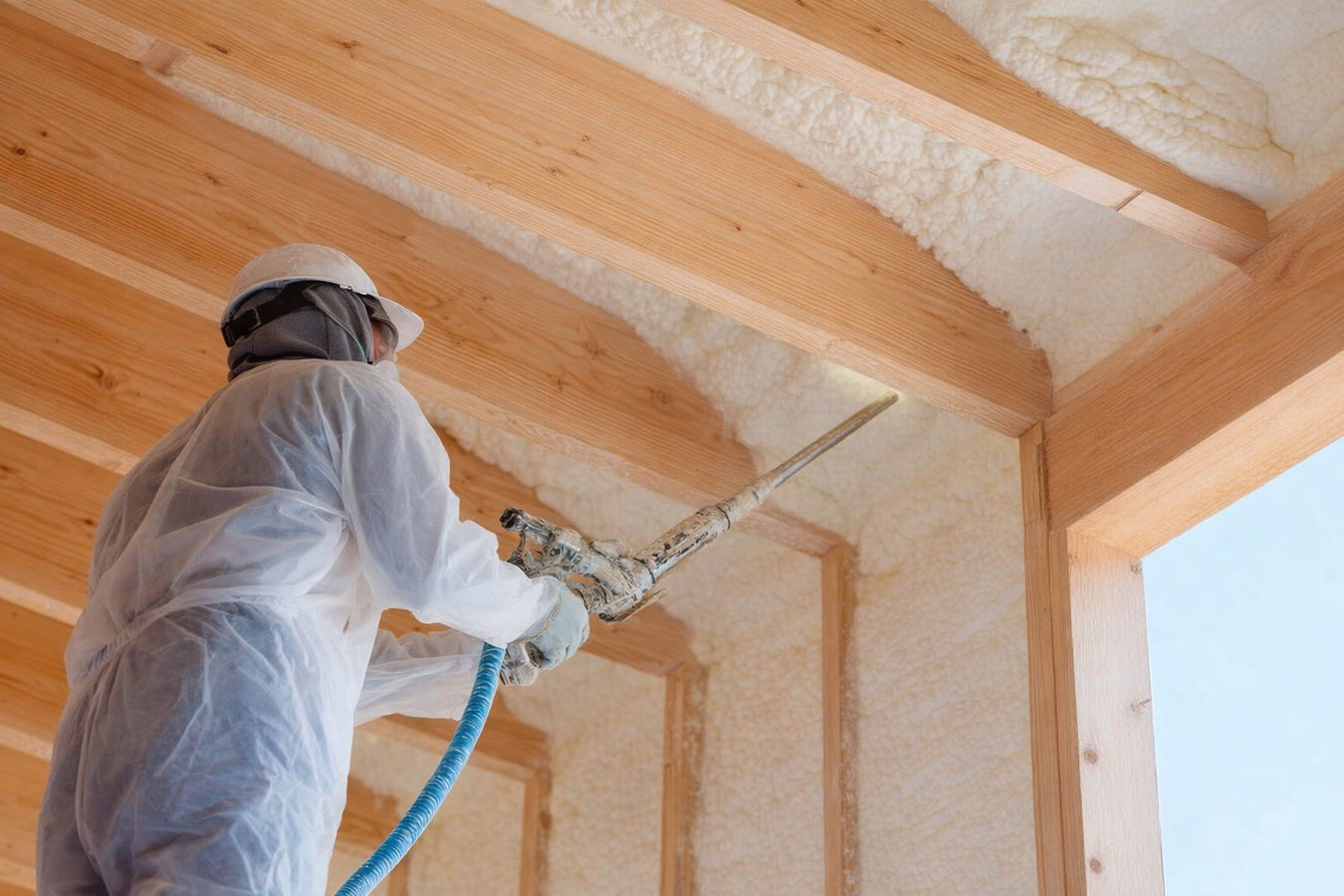
Cold floors and sky-high heating bills in a State College winter are not just inconvenient - they are a sign your home is leaking energy. Spray foam seals and insulates in one step, so your house finally holds heat the way it should.
Spray foam insulation in State College fills gaps and air-seals in a single application - most crawl space and rim joist jobs are finished in one day. It expands on contact to seal every crack, which is why it outperforms rolled or blown-in materials in the tight, irregular spaces that older homes have. If your home was built before 1980, those spots have almost certainly never been properly sealed.
Central Pennsylvania winters are long. From October through April, your home is working hard to hold heat against temperatures that regularly drop into the teens. Any gap in your insulation or air barrier costs you money every single day. Spray foam closes those gaps permanently - and because it does not sag, settle, or absorb water, you will not be revisiting this problem in five years.
Many homeowners pair spray foam with attic insulation to create a complete thermal envelope. If you are not sure where to start, a free walk-through will show you exactly where your home is losing the most heat.
If your gas or electric bill climbs sharply from November through March and never seems to improve, your home is likely losing heat faster than your system can replace it. In State College, where the heating season runs nearly six months, even a modest insulation improvement translates to a real drop in what you pay each month.
Cold floors on the first floor of a home over a crawl space or unheated basement are a classic sign that the space below is not properly insulated or air-sealed. In older State College neighborhoods, this is one of the most common complaints - and the rim joist area is almost always the culprit.
A pipe that freezes is a strong signal that part of your home envelope is not keeping the cold out. In Centre County, where temperatures regularly drop into the single digits, pipes in exterior walls or crawl spaces are vulnerable if insulation is thin, missing, or has shifted. Spray foam in the right areas eliminates that risk.
If you can look into your attic or crawl space and see daylight around pipes or wires, insulation that has fallen away from framing, or batts that are flat and discolored, your insulation is not doing its job. Compressed or wet fiberglass loses most of its insulating value - these are things you can confirm yourself with a flashlight.
We install spray foam in every area where it makes a meaningful difference: crawl spaces, rim joists, attic floors and slopes, basement band joists, exterior walls, and garage ceilings. The right approach depends on your specific home - which is why every job starts with an honest walk-through, not a canned quote.
We offer both open cell spray foam and closed-cell foam insulation. Closed-cell is the stronger choice for crawl spaces and rim joists in State College - it creates a rigid moisture barrier that holds up through repeated freeze-thaw cycles. Open-cell works well in interior walls and attics where moisture control is less critical and budget matters more. We will recommend the right type for each application and explain why.
Seals and insulates below the floor to eliminate cold floors and protect against moisture.
Closes the gap between your foundation and floor framing - a primary source of cold and drafts in older homes.
Applied to the underside of roof decking to create a sealed, conditioned attic space.
High-density, moisture-resistant foam for spaces exposed to humidity or freeze-thaw cycles.
Softer, cost-effective foam well-suited for interior walls and interior attic applications.
Comprehensive treatment of multiple areas in one project for maximum energy performance.
State College sits in a valley where cold air settles and winters run hard from October through April. Average January lows hover around 18 degrees, and the heating season stretches nearly six months. A lot of the homes in and around the borough - particularly in the Highlands and Holmes-Foster neighborhoods near campus - were built before modern energy codes existed, with little or no insulation in rim joists and crawl spaces. Those gaps have been leaking heat and money for decades. Spray foam is often the most practical fix for these tight, irregular spaces where rolling in batts simply does not work.
Centre County also experiences dozens of freeze-thaw cycles each winter, which puts particular stress on crawl spaces and foundation areas. Closed-cell spray foam creates a rigid, moisture-resistant barrier that holds up through those swings in a way fiberglass cannot. We serve homeowners throughout the area, including in Bellefonte and Altoona, where the same climate conditions and older housing stock create the same set of problems.
We will ask a few basic questions - what area you want insulated, the age of your home, and any specific issues like cold floors or high bills. We respond within 1 business day and schedule a free in-person walk-through, because the actual condition of your space determines the scope of work.
A crew member visits to look at the areas you want insulated, check for existing insulation and moisture issues, and measure the space. This visit usually takes 30 to 60 minutes. You get a written estimate before any work begins, with a clear breakdown of what is included.
Clear the work area of stored items you do not want near overspray. We will mask off surfaces we are not spraying. Plan to be out of the home on installation day and for 24 hours after, so the foam can cure and any odor can clear before you return.
The crew arrives, does a final check, and applies the foam - the actual spraying is often just a few hours for a crawl space or attic. When they finish, we walk you through the coverage so you can see what was done and ask questions before we leave.
We respond within 1 business day - no obligation, no pressure. After you submit, someone from our office will call to schedule a free on-site estimate. We will look at your space, explain what we see, and give you a written quote before any work begins.
(814) 996-0035You get a free written estimate that breaks down the scope, materials, and cost before we start. We document the work as we go and coordinate any permits your project needs, so you have a clear record of what was done.
We are a local business, not a franchise or out-of-area crew. When you call, you reach someone who works and lives in this area. If you have a question six months after the job, we are still here.
Every quote is in writing with a clear breakdown of materials and scope. You will know exactly what is included before you decide. The U.S. Department of Energy recommends getting multiple written estimates for any insulation project - and we encourage you to do exactly that.
Not every contractor understands the difference between open-cell and closed-cell foam for specific applications. We spec the right product for each space - closed-cell for crawl spaces and rim joists where moisture and freeze-thaw cycles are factors, open-cell where it makes practical sense.
Spray foam is a long-term investment - when it is done right, you will not need to revisit it. We stand behind our work and walk every customer through what was installed before we leave the job site. If something does not look right, we want to know before you do.
For more general guidance on home insulation, the U.S. Department of Energy Insulation Guide is a reliable starting point.
Pair spray foam with proper attic insulation to create a complete thermal envelope and stop heat from escaping through the ceiling.
Learn moreLearn the specifics of closed-cell spray foam - the high-density option that doubles as a moisture barrier for crawl spaces and rim joists.
Learn moreState College winters do not get milder - the sooner your crawl space and rim joists are sealed, the sooner you stop paying for heat you are losing.