Loading...
Serving State College, PA and surrounding areas. (814) 996-0035
Cold workspaces, high utility bills, and rooms that never quite warm up are signs your commercial building is under-insulated. We install the right materials to fix that - with permits, inspections, and no shortcuts.
Commercial insulation in State College slows heat movement through your building's walls, roof, and floors so your heating and cooling systems do not have to work as hard - most small to mid-size commercial projects are completed in one to three days, depending on the material and building size, with minimal disruption to occupied areas when scheduled thoughtfully. The result is a building that holds temperature more consistently, lower monthly utility bills, and a workspace your staff and customers can actually be comfortable in.
A significant portion of commercial buildings in State College and the surrounding Centre County area were constructed during Penn State's major growth periods in the 1960s and 1970s, under energy codes that called for far less insulation than today's standards require. If your building is from that era and the insulation has never been updated, there is a reasonable chance it is underperforming in ways that show up on your utility bill every January. The right first step is an honest on-site assessment before anyone recommends a product.
We handle both commercial insulation and related residential services like spray foam insulation, so if your property includes both commercial and residential units, we can assess the whole building in one visit. Call or submit your information and we will respond within one business day.
If your energy costs jump dramatically during State College's coldest months and your HVAC seems to run constantly, heat is escaping through under-insulated walls, ceilings, or floors. For a commercial building paying to heat a larger space, that gap between what you spend and what you should spend can be significant.
In older commercial buildings around State College - especially those built before the 1980s - it is common to find that some spaces are noticeably colder than others even when the heat is running. This usually means insulation is thin, missing, or has settled and left gaps. If your staff or customers consistently complain about cold spots, that is a pattern worth investigating.
Any visible gap where outside light comes through, any cold draft near a wall or window frame, or condensation forming on interior wall surfaces during winter are signs that your building envelope is not doing its job. These are not just comfort issues - they mean your heating system is working against the weather rather than with your building.
A large share of commercial buildings in State College were constructed during Penn State's growth periods in the 1960s and 1970s. Buildings from that era were built to energy standards far below what is required today. If no one has ever assessed or upgraded the insulation, the gap between what you are spending on energy and what you could be spending is likely significant.
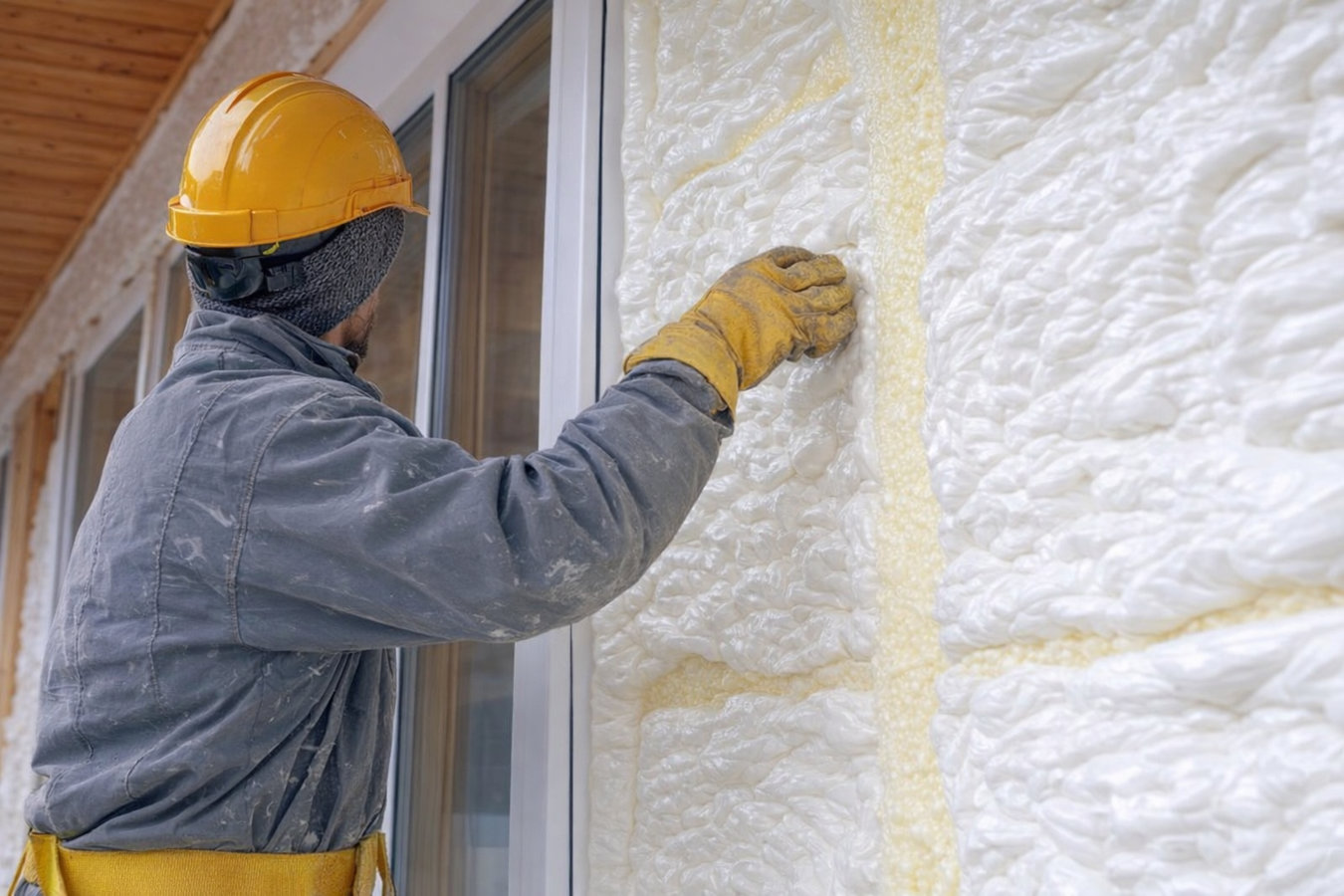
We assess commercial buildings across Centre County and recommend the material best suited to the space - spray foam for sealing gaps and irregular cavities, blown-in loose fill for attic areas, and rigid board for flat roofs and exterior walls. The right choice depends on your building's construction, how it is used, and where the heat loss is happening. We do not push you toward the most expensive option; we match the material to the problem. If your property also includes crawl spaces or below-grade areas that need moisture management, we can address that through our crawl space vapor barrier service as part of the same project.
Every commercial project includes a written estimate that breaks down cost by area and material, permit handling where required, and a final walkthrough before the crew leaves. For building owners who want to compare spray foam options in detail, our spray foam insulation page explains the difference between open-cell and closed-cell products and how each is used in commercial settings.
Best for older buildings with irregular cavities, gaps around structural members, and areas where air sealing and insulation are needed together.
Suited for commercial buildings with accessible attic or roof spaces that need insulation added without disturbing occupied areas.
For buildings undergoing re-cladding or exterior renovation that want continuous insulation added to the wall assembly.
For buildings with old, wet, or pest-damaged insulation that needs to come out before new material can go in.
For properties with both commercial and residential units that want a single contractor to assess and address the whole building.
For building owners who want to understand where heat is escaping before committing to a specific product or scope of work.
State College sits in a mountain valley in central Pennsylvania with winter temperatures that regularly drop into the single digits and a heating season that stretches from October through April. For any commercial building - a small office, a retail shop, a restaurant near campus - that kind of sustained cold puts enormous pressure on heating systems. Buildings from the 1960s and 1970s that were constructed under older energy codes are simply not equipped to handle it without losing significant heat through walls, roofs, and floors. Pennsylvania follows the International Energy Conservation Code for commercial buildings, and State College falls in Climate Zone 5, which calls for higher insulation levels than warmer parts of the country. Any permitted commercial insulation project in Centre County must meet those minimums.
The presence of Penn State University also means State College has an unusually high concentration of older commercial buildings and mixed-use properties that have changed hands or use multiple times over the decades, often without any insulation updates along the way. We serve building owners throughout the region, including in Altoona and Bellefonte, where similar building stock and the same cold winters create the same energy challenges. If you are not sure whether your building is a candidate for an upgrade, a free on-site assessment will give you a clear answer without any obligation.
We ask a few basic questions about your building - type, size, and what is prompting the call. This helps us come prepared for the site visit. Most contractors in the State College area can schedule an initial assessment within a week or two. We reply to all inquiries within one business day.
We walk through the areas where insulation is installed or missing - attic or roof space, exterior walls, mechanical and crawl space areas. At the end of the visit, we tell you what we found, what we recommend, and why - in plain language, not construction jargon.
You receive a written estimate that breaks down cost by area and material type. We explain the difference between options without pushing you toward the most expensive choice. Compare estimates if you are getting more than one, and ask questions before signing anything.
The crew works through the building systematically, protecting surfaces and cleaning up each day. Most small to mid-size commercial jobs are done in one to three days. Before the crew leaves, we walk through the completed work with you and provide permit documentation if required.
No pressure. We assess the space, explain what we find, and give you a written quote with material options - before you commit to anything.
(814) 996-0035Commercial insulation work in Pennsylvania requires permits in most cases, and we handle the application and inspection process on every job. That means the work is reviewed by a municipal official - not just the contractor - which protects your investment and gives you documentation that the building meets current energy code requirements.
We cover State College and 11 surrounding communities across Centre County and the broader region. You get a contractor who knows the local building stock, understands the permit process in each municipality, and does not need to learn your area from scratch when they show up for the assessment.
We follow industry guidelines established by the North American Insulation Manufacturers Association (NAIMA), the leading trade association for commercial insulation. Following recognized standards means the installation methods and materials we use are backed by tested practices - not improvised on the job.
Your estimate shows what areas we cover, what materials we install in each location, whether a permit is included, and the total cost before you sign anything. We do not add charges on installation day that were not in the written quote. If we find something unexpected during the assessment, we tell you before we schedule the work.
Each of those points reflects how we approach every job: the right material for the building, the permit pulled before work starts, and a walkthrough at the end so you know exactly what was done and why. That is what a fair-dealing commercial contractor looks like.
Pennsylvania commercial energy code requirements are set by the International Energy Conservation Code. State College Borough building permits and inspections are administered through the State College Borough Building Department.
Moisture control beneath commercial buildings is as important as insulation - a vapor barrier stops ground moisture before it damages your investment.
Learn moreLearn how spray foam performs in both residential and commercial applications and why it is often the strongest choice for sealing older building envelopes.
Learn moreFall is the busiest time for commercial insulation in State College - the sooner you reach out, the more scheduling flexibility we have before winter arrives.